
Teknik Rehber
What Is SPI Flash Memory? How Is It Used for Firmware Storage and Board Repair?
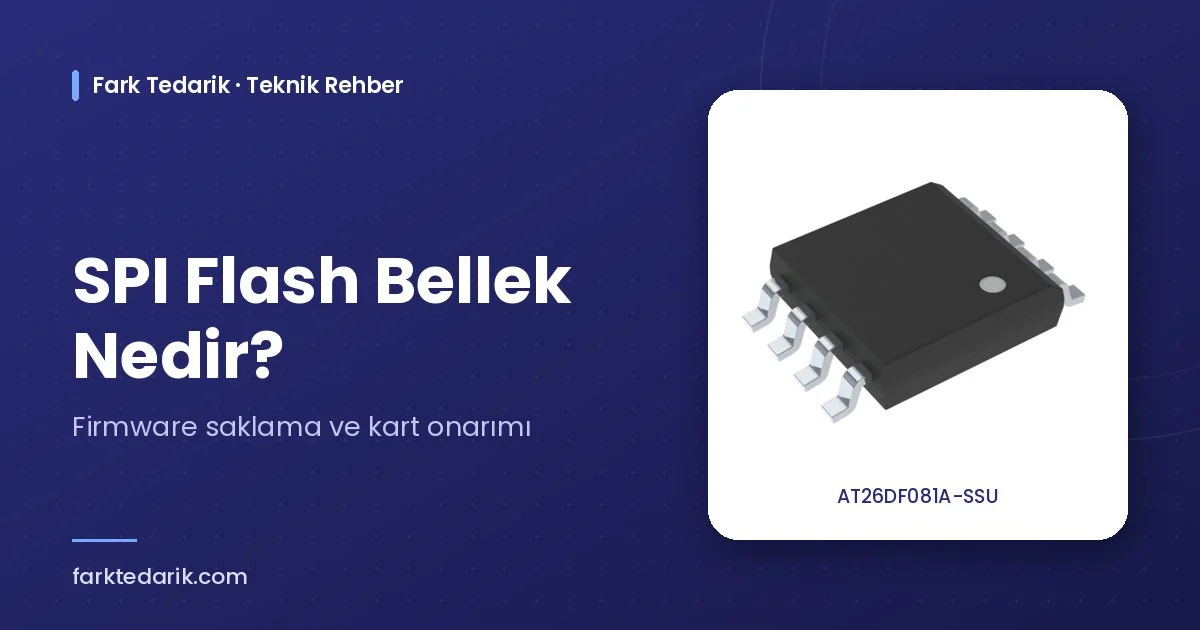
SPI flash memory is a non-volatile memory IC that keeps its data when the power is off and is read and written through the SPI (Serial Peripheral Interface) serial interface. In televisions, monitors, set-top boxes, motherboards and industrial control boards, the device software (firmware), boot code and settings are usually stored in a small 8-pin SPI flash IC. When this IC fails or its content is erased, the device may not start. In this article we have collected the basics for technicians and designers asking questions like “what is SPI flash memory” or “how to replace a TV firmware IC”.
How SPI Flash Memories Work
Flash memory stores data as electric charge in floating gate transistors, since the charge is kept when the supply is removed, the data is not lost. On the SPI interface communication takes place over four lines: CS (chip select), SCK (clock), SI/MOSI (data in) and SO/MISO (data out). The microcontroller or processor sends commands and addresses over these lines.
Before writing to flash memory, the area concerned must be erased. Erasing is done at sector (for example 4 KB), block (for example 64 KB) or whole-chip level, while writing usually takes place in 256-byte pages. The WP# (write protect) pin and software protection bits prevent important data from being erased by mistake.
Where Is It Used?
With their small size and low pin count, SPI flash memories are used in a very wide range of applications:
- TVs, Monitors and Set-Top Boxes: The main board software and panel settings are stored, when the software is corrupted the IC is programmed or replaced.
- Motherboards and Embedded Systems: Boot code and BIOS/UEFI-like software are stored.
- Industrial Control Boards: Device software, parameters and calibration data are kept.
- Microcontroller Projects: Large data such as data logs, images and font files are written to external flash memory.
- Repair and Spare Parts: On faulty boards the IC is replaced with one of the same capacity and pinout.
Why Is SPI Flash Memory Needed?
The internal memory of many processors and microcontrollers is not enough to store the entire device software. SPI flash memory makes it possible to store megabytes of data with only a few pins, update the software in the field and use the same board with different software. On the repair side, finding the right IC is critical: an IC whose capacity, supply voltage, package and command set are not compatible may leave the device not working even if it is programmed.
The Solution: EN25F80 and AT26DF081A 8 Mbit SPI Flash Memories
The EN25F80-100HCP is an 8 Mbit (1 MB) SPI flash memory made by Eon Silicon Solution (EON). It supports SPI Mode 0 and 3, runs at clock frequencies up to 100 MHz and works with a single 2.7–3.6 V supply. It has 256 sectors of 4 KB, 16 blocks of 64 KB and a 256-byte page structure, and offers software and hardware (WP#) write protection and a 256-byte OTP area. It withstands at least 100,000 erase/program cycles. It comes in an 8-pin SOP (200 mil) package.
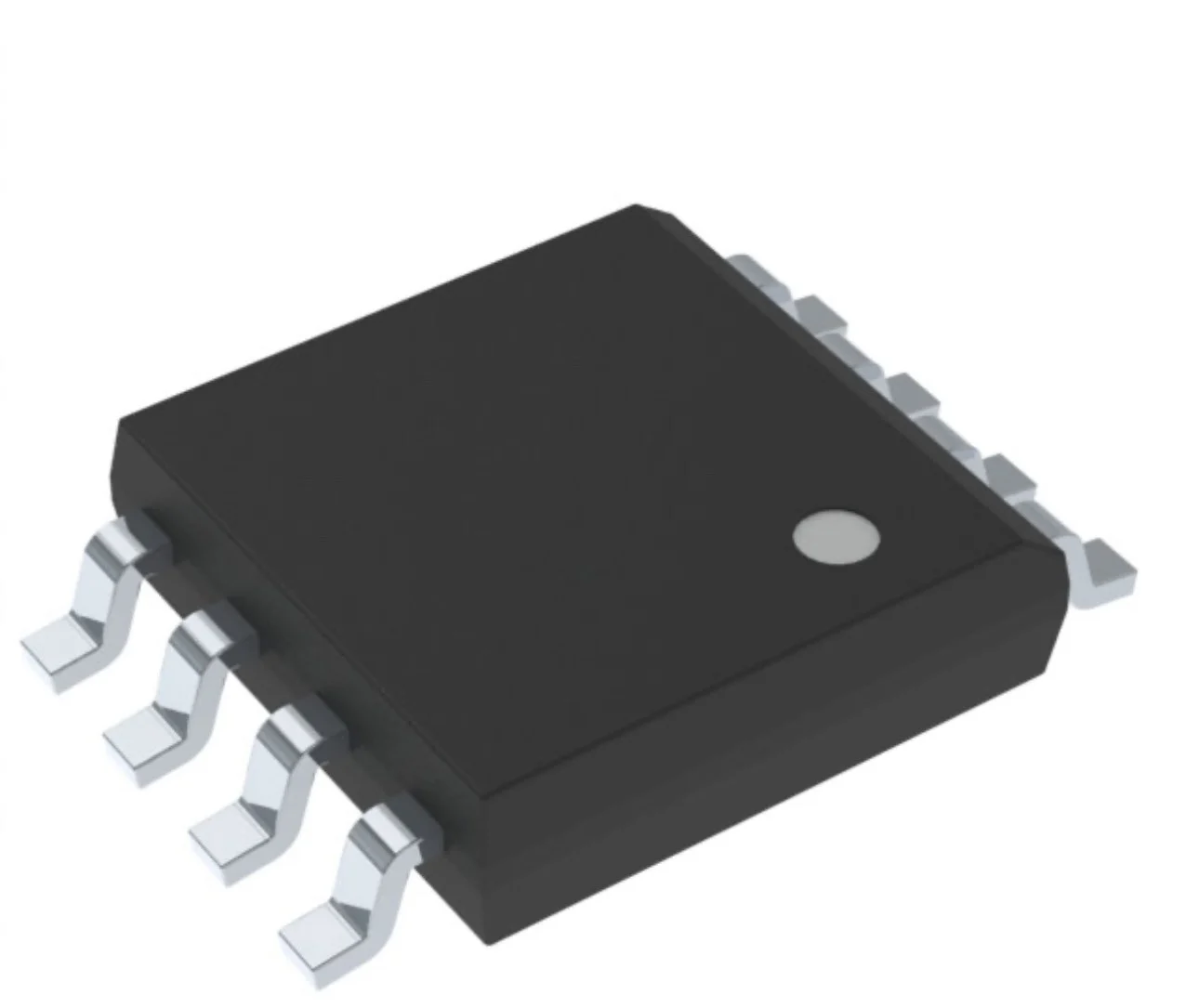
The AT26DF081A-SSU is an 8 Mbit DataFlash® serial flash memory made by Atmel (today in the Renesas/Adesto portfolio). It offers SPI clock frequencies up to 70 MHz, a 2.7–3.6 V supply, a 4,096 pages × 256 bytes organisation and an industrial temperature range of -40 … +85 °C. It comes in an 8-pin SOIC (0.150″) package. As it is a discontinued part, it is supplied mainly for the repair of existing devices and for spare part needs.
You can order these ICs from Fark Tedarik with a company invoice:
You can browse other memory and logic ICs in our Integrated Circuits category.
Additional Advantages and Usage Tips
In a repair, before fitting a new SPI flash, read and back up the content of the old IC with a programmer if possible, in many devices device-specific data such as the serial number, panel settings or MAC address are stored in this memory. When programming the new IC, make sure that the capacity (8 Mbit = 1 MB) and the supply voltage (2.7–3.6 V) are the same, if you use a programmer that works with 5 V a level shifter may be needed.
Also pay attention to the package width: the EN25F80-100HCP comes in a 200 mil wide SOP and the AT26DF081A-SSU in a 150 mil wide SOIC package, you should choose the one that fits the solder pads on the board. To find the right equivalent IC contact the Fark Tedarik team: https://farktedarik.com/iletisim/.
Frequently Asked Questions
How many MB is 8 Mbit?
8 Mbit, that is 8 million bits, corresponds to a capacity of 1 MB (megabyte). The “80” or “081” in IC part numbers usually indicates this 8 Mbit capacity.
Can a different brand of SPI flash be used instead of the EN25F80?
If the capacity, supply voltage, package and basic command set are compatible, an equivalent can be used in many cases. However, problems may occur if the device software checks a specific manufacturer ID (JEDEC ID), so choose the same model if possible.
How is SPI flash memory programmed?
The IC is programmed with an SPI-capable programmer either on the board (with a clip) or off the board with a socket. The existing content is backed up first, then the new software file is written and verified.
Why is the AT26DF081A hard to find?
The AT26DF081A is a discontinued (obsolete) part. It is supplied from stock for the repair of existing devices, for new designs a current SPI flash is recommended.