
Teknik Rehber
What Is a Particulate Sensor? How Is It Used in Air Quality Monitoring?
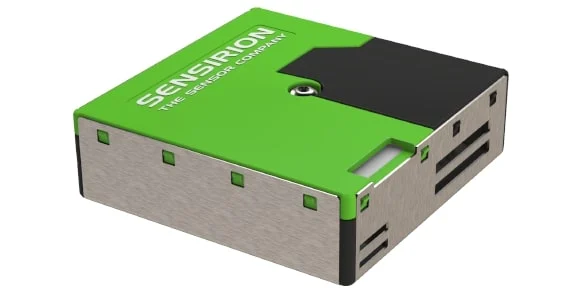
Particulate sensors are devices that detect dust, smoke, pollen and other fine particles (PM – Particulate Matter) in the air and measure their concentration. By monitoring air quality in real time, these sensors determine particles of different sizes such as PM1.0, PM2.5, PM4.0 and PM10 in µg/m³ (micrograms per cubic metre) or as number concentration. Users who search Google for “how does a particulate sensor work” or “what is an air quality monitoring sensor” want to understand the importance of this technology both for the environment and for health. Especially today, as industrial pollution, indoor air quality issues and respiratory diseases increase, particulate sensors are becoming more and more important. High particle levels (for example values above the 24-hour PM2.5 limit of 15 µg/m³ in the World Health Organization’s 2021 guideline) can lead to asthma, heart conditions and premature deaths, so early detection is critical.
How Particulate Sensors Work
Particulate sensors are usually based on laser scattering technology. In this principle, a laser diode inside the sensor sends a light beam into the air flow. Particles suspended in the air scatter this light towards the sensor’s photodetector. The amount and angle of scattering determine the size and concentration of the particle. Large particles scatter light more strongly and mainly forward, at narrow angles, while the light scattered by small particles is weaker and spreads over wider angles. The sensor determines the particle size from the intensity of the scattered light pulses. Manufacturers such as Sensirion have improved this technology with a “contamination resistance” feature that protects the fan and optical components inside the sensor from dust. This extends the life of the sensor and maintains measurement accuracy.
Besides the optical method there are also reference methods such as beta attenuation (BAM) or gravimetric measurement, but the most widely used method in compact devices is laser scattering. Thanks to digital outputs (I²C or UART), data is easily transferred to microcontrollers (for example Arduino or Raspberry Pi). The measuring range is typically 0–1000 µg/m³. Laser sensors with a fan draw a few hundred milliwatts during measurement (SPS30: 45–65 mA at 5 V, about 0.23–0.33 W), by switching to sleep mode between measurements the consumption of battery-powered devices can be reduced considerably.
Technical Specifications and Measurement Parameters
The effectiveness of particulate sensors depends on their technical specifications. In general:
- Particle Sizes: They measure in the PM0.5, PM1.0, PM2.5, PM4.0 and PM10 categories, for example PM2.5 refers to particles with a diameter of 2.5 µm and below. In the SPS30 the measured size range starts from 0.3 µm (0.3–2.5 µm for PM2.5, 0.3–10 µm for PM10). PM2.5 is the size that penetrates deepest into the lungs and is classified as the most dangerous by the World Health Organization (WHO).
- Accuracy and Precision: In the SPS30, the precision for PM1.0 and PM2.5 is ±(5 µg/m³ + 5% of the measured value) in the 0–100 µg/m³ range and ±10% in the 100–1000 µg/m³ range, for PM4 and PM10 these values are ±25 µg/m³ and ±25%. Some models also measure number concentration (particles/cm³), the number concentration range of the SPS30 is 0–3000 #/cm³.
- Operating Conditions: For the SPS30 the operating temperature is -10…+60 °C and humidity 0–95% RH (non-condensing), the best performance is achieved in the 10–40 °C and 20–80% RH range. Very high humidity conditions such as fog or condensation can make optical measurements read higher than actual.
- Interface and Power: Usually there is a UART and/or I²C interface, the SPS30 works with a 5 V ±10% (4.5–5.5 V) supply and draws 45–65 mA in measurement mode.
- Lifetime and Maintenance: In contamination-resistant models, a lifetime of more than 10 years in 24/7 operation and automatic fan cleaning (once a week by default on the SPS30).
These features make it easier to integrate the sensor into air quality monitoring systems and to log data, for standard measurements such as clean room classification, calibrated particle counters are used.
Where Is It Used?
Particulate sensors are used in many sectors where air pollution is monitored. Here are the main applications:
- Indoor Air Quality Monitoring: Used in homes, offices and schools. For example, in a smart air purifier the filter starts automatically when the PM2.5 level exceeds 35 µg/m³, reducing allergy and asthma symptoms.
- HVAC Systems: In heating, ventilation and air conditioning systems they monitor the efficiency of air filters. In factory ventilation, particle build-up can lead to energy loss, sensors help carry out maintenance at the right time by monitoring filter efficiency.
- Industrial and Production Environments: For dust control in automotive, electronics and pharmaceutical factories. For example, in ISO 14644-1 Class 5 clean rooms used in semiconductor production, the number of particles of 0.5 µm and above must not exceed 3,520 per m³, otherwise product defects increase.
- Environmental Monitoring and Urban Planning: In air quality stations they create pollution maps of cities. For example, PM10 measurement in high-traffic areas shapes emission policies.
- Portable Devices and Wearables: In smart watches or portable monitors for personal air quality tracking. They warn of high PM levels while running.
- Agriculture and Greenhouse Management: By monitoring dust and pollen levels in greenhouses and farms, they provide data for ventilation and filtration decisions.
- Health and Medical Applications: In hospitals they monitor operating theatre air quality. During pandemics they help determine ventilation needs by monitoring aerosol density (the sensor does not distinguish whether a particle carries a virus).
With IoT integration these applications enable cloud-based data analysis and create large data sets.
Why Is a Particulate Sensor Needed?
Air pollution is a global health crisis: according to the WHO it causes 7 million premature deaths a year. Manual measurements (for example filter sampling) are slow and expensive, whereas particulate sensors offer real-time, automatic monitoring. High particle levels increase respiratory infections, reduce productivity and raise energy costs. For example, high PM2.5 levels in offices can negatively affect employees’ comfort and productivity. With early warning systems, sensors minimise these risks, support legal compliance (for example the EU Ambient Air Quality Directive) and contribute to sustainability goals. Users research these benefits with questions such as “how does a particulate sensor prevent air pollution” or “why is PM2.5 measurement important”. In the long term, sensors can reduce operating costs by making air purifiers and filters run only when needed.
The Solution: Sensirion SPS30 Particulate Sensor
If you are looking for high accuracy and durability, Sensirion’s SPS30 is a strong option for industrial and professional applications. Working on the laser scattering principle, this sensor measures mass concentration (0–1000 µg/m³) and number concentration for PM1.0, PM2.5, PM4.0 and PM10. For PM1.0 and PM2.5 the precision is ±(5 µg/m³ + 5%) in the 0–100 µg/m³ range and ±10% in the 100–1000 µg/m³ range. Its contamination-resistant technology offers a lifetime of 10+ years with fan-driven air flow and optical protection. With its UART and I²C interfaces, 5 V ±10% supply and controlled power consumption (45–65 mA in measurement, about 330 µA idle, below 50 µA in sleep mode) it integrates easily with Arduino, Raspberry Pi or PLC systems. Its operating range is -10…+60 °C and 0–95% RH (non-condensing), it performs best in the 10–40 °C and 20–80% RH range. This makes the sensor suitable for sheltered outdoor applications as well as indoors.
You can source this sensor in Türkiye through Fark Tedarik:
The SPS30 is used in a wide range of applications, from HVAC systems to portable air quality monitors. Its compact size (41 x 41 x 12 mm) and automatic cleaning mode reduce maintenance needs. For more information you can visit the Fark Tedarik website, download technical documents or request a quote.
Additional Advantages and Usage Tips
The SPS30 stands out for data logging and long-term monitoring. For example, by logging daily PM levels in a factory you can optimise filter replacement times and reduce maintenance costs. Sensirion’s contamination-resistant design minimises measurement drift caused by dust build-up over a long period. Integration tips: build a simple air quality monitor with Arduino using I²C, libraries (Sensirion SPS30 library) are available. Also extend battery life with the low-power mode – it consumes below 50 µA in sleep mode. Combine it with other sensors (humidity/CO2) to build a complete air quality system.
For comparison, the SPS30 offers a lifetime of more than 10 years in 24/7 operation and, with its contamination-resistant design, minimises measurement errors that develop over time. If you want to monitor air pollution in your project, consider the features of the SPS30. With Fark Tedarik’s expert support, contact us now for customised solutions: https://farktedarik.com/iletisim/. Take a step towards a cleaner and healthier environment with particulate sensors!
Combining particulate measurement with gas measurement lets you monitor indoor air quality more completely. We explained how volatile organic compounds are measured in our VOC sensor guide. To detect filter clogging from the pressure drop in air purifiers and HVAC systems, see our what is a differential pressure sensor article, and to measure air flow, our mass flow sensor guide.
Conclusion and Future Trends
Particulate sensors are becoming increasingly important in smart city and sustainability trends. In the future, prediction models will be developed with AI integration, for example to warn of rising pollution in advance. Long-life, stable sensors such as the SPS30 are one of the basic components of such systems. Get a sensor today to protect your air quality and feel the difference.